

學校適應能力問卷
Adaptive Functioning in School Questionnaire (AFSQ)
學校適應能力問卷(AFSQ)專為評估注意力不足/過度活躍症(ADHD)學童在學校多個層面的適應能力而設計。此工具能評量學童面臨的各類適應困難,可作為教師及相關專業人員制定介入策略的參考依據。
The Adaptive Functioning in School Questionnaire (AFSQ) is specifically designed to assess the school adaptive functioning of children with attention-deficit/hyperactivity disorder (ADHD) across multiple key domains. It identifies the diverse challenges students face in adaptation, thereby providing teachers and professionals with valuable guidance for designing targeted interventions.
Zheng, Q., Hui, B. K. H., Li, J., & Shum, K. K. M. (2025). Adaptive Functioning in School: A Multidimensional Questionnaire for Assessing Functional Challenges Beyond Symptoms in Students with ADHD. Child Psychiatry & Human Development, 1-20. https://doi.org/10.1007/s10578-025-01867-7

「賽馬會喜躍悅動計劃」訓練資源套
“Jockey Club Keen and Active Kids Project” Professional Training Kit
「訓練資源套」為「賽馬會喜躍悅動計劃」的專業支援工具。資源套包括使用指南及五本訓練導讀冊,內容涵蓋腦科學基礎、自我覺察、抑制衝動、情緒管理、計劃與組織、任務執行及堅持完成等多元範疇,旨在協助教育工作者及輔導人員掌握注意力不足/過度活躍症(ADHD)學生的訓練策略與介入技巧。資源套提供豐富的活動設計、教案範例及實務建議,讓導師能靈活運用於校本或課後訓練,幫助學生在學校及日常生活中有效提升專注力、自我調節及執行功能。
The "Professional Training Kit" is a support tool of the “Jockey Club Keen and Active Kids Project”. It consists of a user guide and five training guidebooks, covering diverse areas including the neuroscience foundation, self-monitoring, impulse control, emotional management, planning and organisation, task completion. The kit aims to help educators and counselling professionals master training strategies and intervention techniques for students with attention-deficit/hyperactivity disorder (ADHD). The resource kit provides a rich collection of activity designs, lesson plan examples, and practical recommendations, enabling instructors to flexibly apply them in school-based or after-school training sessions, thereby effectively enhancing students’ concentration, self-regulation, and executive functioning in school and daily life.
香港大學心理學系(2024)。《「賽馬會喜躍悅動計劃」訓練資源套》。香港:香港大學心理學系及香港賽馬會慈善信託基金。

「賽馬會喜躍悅動計劃」專業導師培訓課程
“Jockey Club Keen and Active Kids Project” Practitioner Course
「專業導師培訓課程(初階)」與「專業導師培訓課程(進階)」為「賽馬會喜躍悅動計劃」的核心培訓項目。初階課程旨在協助導師掌握計劃理念、學生評估方法及核心介入策略;進階課程則透過真實案例分享、小組與個別督導,深化導師分析注意力不足/過度活躍症(ADHD)學生需求、靈活調整訓練與輔導策略的能力,以確保學生能在學校中獲得適切有效的支援。
The "Introductory Practitioner Course" (IPC) and "Advanced Practitioner Course" (APC) form the core professional training of the “Jockey Club Keen and Active Kids Project”. The IPC equips instructors to master the project's philosophy, student assessment methods, and core intervention strategies. The APC, conducted through real-case studies along with group and individual supervision, further enhances instructors' capabilities in analysing the needs of students with attention-deficit/hyperactivity disorder (ADHD), adapting training and coaching strategies flexibly, and ultimately ensuring these students receive appropriate and effective support in schools.
香港大學心理學系(2024)。《「賽馬會喜躍悅動計劃」專業導師培訓課程》。香港:香港大學心理學系及香港賽馬會慈善信託基金。

神經回饋與虛擬實境訓練
VR-fNIRS Intervention
此訓練結合了神經回饋技術與虛擬實境所模擬的課堂環境,旨在提升 7至12歲注意力不足/過度活躍症(ADHD)學童的專注力與自我調節能力。
This intervention combines neurofeedback technology with virtual reality to simulate classroom environment, aiming to enhance attention and self-regulation abilities among children with attention-deficit/hyperactivity disorder (ADHD) aged 7-12.
Zheng, Q., Kei, K. T. L., Chiu, K. Y., & Shum, K. K. M. (2024). Study protocol of a randomised controlled trial of the effects of near-infrared spectroscopy neurofeedback training coupled with virtual reality technology in children with ADHD. BMJ open, 14(12), e093183. https://doi.org/10.1136/bmjopen-2024-093183
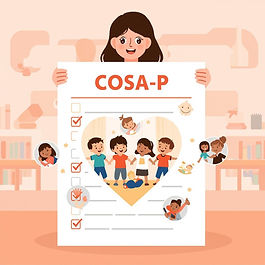
《幼兒社交課堂觀察量表》
Classroom Observation Scale for Autism in Preschool (COSA-P)
《幼兒社交課堂觀察量表》是專為學前教師及非臨床人員設計的篩查工具,旨在協助使用者於日常課堂中,透過即時觀察幼兒的同儕互動,以早期識別有自閉症譜系障礙(ASD)特徵的幼兒。
The Classroom Observation Scale for Autism in Preschool (COSA-P) is a screening tool specifically designed for preschool teachers and non-clinical personnel. It aims to assist users in early identification of children with characteristics of autism spectrum disorder (ASD) by conducting real-time observations of peer interactions during routine classroom activities.
Au, A. H. C., Shum, K. K. M., Cheng, Y., Tse, H. M. Y., Wong, R. M. F., Li, J., & Au, T. K. F. (2021). Autism spectrum disorder screening in preschools. Autism, 25(2), 516-528. https://doi.org/10.1177/1362361320967529
Shum, K. K. M., Wong, R. M. F., Au, A. H. C., & Au, T. K. F. (2022). Autism spectrum disorder screening in Chinese-language preschools. Autism, 26(2), 545-551. https://doi.org/10.1177/13623613211039373

《幼兒社交課堂觀察量表》使用手冊
Classroom Observation Scale for Autism in Preschool (COSA-P) User Manual
《幼兒社交課堂觀察量表》使用手冊為學前教師及非臨床人員提供全面指引,旨在協助使用者理解並準確運用COSA-P量表,對幼兒進行課堂觀察與初步篩查,以促進早期識別有自閉症譜系障礙(ASD)特徵的幼兒。
The User Manual for the Classroom Observation Scale for Autism in Preschool (COSA-P) provides comprehensive guidance to preschool teachers and non-clinical personnel. It is designed to help them understand and accurately apply the COSA-P in conducting classroom observations and preliminary screenings, thereby facilitating the early identification of children who exhibit characteristics of autism spectrum disorder (ASD).
Tang, J. W. Y., Wong, N. K., Wong, H. Y., Cheng, W. S., Shum, K. K. M. (2023). User Manual for the Classroom Observation Scale for Autism in Preschool (COSA-P) [“幼兒社交課堂觀察量表”使用手冊]. Department of Psychology, The University of Hong Kong and Quality Education Fund.

《幼兒社交課堂觀察量表》教師培訓工作坊
Classroom Observation Scale for Autism in Preschool (COSA-P) Teacher Training Workshop
《幼兒社交課堂觀察量表》教師培訓工作坊內容涵蓋自閉症譜系障礙(ASD)特徵、量表設計理念及實務應用技巧。工作坊透過個案研討,引導學員進行項目討論與評分練習,協助學前教育工作者熟練掌握並準確運用COSA-P量表。
The Classroom Observation Scale for Autism in Preschool (COSA-P) teacher training workshop covers the characteristics of autism spectrum disorder, the scale's design principles, and practical application skills. Through case discussions, the workshop guides participants through in-depth item analysis and scoring practice, equipping preschool educators to use the COSA-P confidently and accurately in classroom settings.
Tang, J. W. Y., Wong, N. K., Wong, H. Y., Cheng, W. S., Shum, K. K. M. (2023). Teacher Training Project on the Use of the Classroom Observation Scale for Autism in Preschool (COSA-P) [“幼兒社交課堂觀察量表” 教師培訓計劃]. Department of Psychology, The University of Hong Kong and Quality Education Fund.

「愈讀愈伶俐──對話式閱讀」親子訓練
Parent-Child Dialogic Reading
「愈讀愈伶俐──對話式閱讀」親子訓練以對話式閱讀模式為基礎設計,旨在鼓勵家長與幼兒共讀時進行互動。課程運用PEER四大步驟(提示、評估、擴展、複述)及CROWD五類提問技巧(填充、回想、開放式問題、六何法、融入生活體驗),有效提升幼兒的詞彙量、語言理解及表達能力。
This parent-child training is designed based on the Dialogic Reading model, aiming to encourage interactive exchanges between parents and young children during shared book reading. By utilizing the four-step PEER sequence (Prompt, Evaluate, Expand, Repeat) and the five CROWD prompting techniques (Completion, Recall, Open-ended questions, Wh-questions, and Distancing), the program effectively enhances children's vocabulary, language comprehension, and expressive abilities.
香港大學心理學系與明愛康復服務(2020)。「愈讀愈伶俐──對話式閱讀」親子訓練。香港:明愛康復服務。

對話式閱讀家長培訓工作坊
Parent Training Workshop on Dialogic Reading
對話式閱讀家長培訓工作坊內容涵蓋對話式閱讀核心理念、四大學習支援策略(視覺提示、分級提問、注意力引導及情緒推理問答),以及親子共讀的實務應用技巧。工作坊透過真實個案示範與親子互動練習,引導家長掌握策略運用,協助幼兒在共讀過程中提升語言表達、注意力與社交理解能力。
This Parent Training Workshop on Dialogic Reading covers the core principles of dialogic reading, four key support strategies (visual prompts, levelled questioning, attention guidance, and emotion reasoning questions), and practical techniques for shared picture book reading. Through real-life case demonstrations and parent-child interaction practice, the workshop guides parents in effectively applying these strategies, enabling young children to enhance language expression, attention, and social understanding during shared reading.
Lo, J. Y. T., & Shum, K. K. M. (2021). Brief report: A randomized controlled trial of the effects of RECALL (Reading to engage children with autism in language and learning) for preschoolers with autism spectrum disorder. Journal of Autism and Developmental Disorders, 51(6), 2146-2154. https://doi.org/10.1007/s10803-020-04692-0

《香港2-6歲幼兒成長發展檢核表》
HKSPC Developmental Checklist (HKSPC-DC)
《香港2-6歲幼兒成長發展檢核表》是一套專為2至6歲幼兒設計的綜合發展評估工具。由學前教育工作者透過課堂觀察,評估幼兒在認知、語言、動作、以及社交與自理四大發展領域的表現,以全面掌握學童的發展進程,並協助識別有發展遲緩風險的幼兒。
The Hong Kong Developmental Checklist for Preschool Children (HKSPC-DC) is a comprehensive developmental assessment tool specifically designed for children aged 2 to 6. Through classroom observations conducted by preschool educators, it evaluates a child's performance across four major developmental domains—cognitive, language, motor, and social/self-care skills—to gain a comprehensive overview of developmental progress and to help identify those at risk for developmental delays.
Lam, C. W. C., Shum, K. K. M., Chui, Y. F., Choi, W. L., Wong, Y. M., & Yung, S. T. (2019). 香港2-6歲幼兒成長發展檢核表 [Developmental Checklist for Hong Kong Preschoolers Aged 2-6]. Hong Kong: Hong Kong Society for the Protection of Children.
Shum, K. K. M., Zheng, Q., Wong, W. L. L., Wong, Y. M., & Lam, C. W. C. (2022). Validation of a developmental screening checklist for Chinese preschoolers in Hong Kong. Child Neuropsychology, 28(8), 997-1030. https://doi.org/10.1080/09297049.2022.2038117

「導思有法」訓練課程
“Think Bright” Training Program
「導思有法」訓練課程專為有發展遲緩的學前幼兒而設計。課程針對三項核心認知能力——類比思維、順序思維與邏輯推理,旨在提升幼兒的認知、推理及問題解決能力。
The "Think Bright" training program is designed for preschool children with developmental delays. It targets three core cognitive abilities—analogical thinking, sequential thinking, and logical reasoning—to enhance children's cognitive skills, reasoning, and problem-solving abilities.
Keung, A. Y. C., Ho, V. F. L., & Shum, K. K. M. (2022). Early cognitive intervention using mediated learning for preschoolers with developmental delay: A randomized controlled trial. British Journal of Educational Psychology, 92(3), 1109-1132. https://doi.org/10.1111/bjep.12490
Keung, Y. C., Ho, F. L., Kwan, P. S., & Shum, K. K. M. (2018). “Think Bright” higher-order thinking training program for preschoolers: Teacher’s manual for individual training [Think Bright導思有法幼兒高階思維訓練教師手冊]. Hong Kong: Heep Hong Society.
Keung, Y. C., Ho, F. L., Kwan, P. S., & Shum, K. K. M. (2019). “Think Bright” higher-order thinking training program for preschoolers: Teacher’s manual for group training [Think Bright導思有法幼兒高階思維訓練教師手冊(小組訓練)]. Hong Kong: Heep Hong Society.

「無國界校園」
School without Borders
「無國界校園──小學共融課程」及「無國界校園──中學共融課程」旨在引導學生欣賞文化多樣性、接納不同族裔同儕,並攜手共建和諧共融的校園文化。
The "School Without Borders – Primary School Inclusion Program" and "School Without Borders – Secondary School Inclusion Program" are designed to foster students' appreciation for cultural diversity, acceptance of peers from diverse ethnic backgrounds, and collective cultivation of a harmonious and inclusive school culture.
Lam, S. F., Shum, K. K. M., Chan, W. W. L., & Tsoi, E. W. S. (2021). Acceptance of outgroup members in schools: Developmental trends and roles of perceived norm of prejudice and teacher support. British Journal of Educational Psychology, 91(2), 676-690. https://doi.org/10.1111/bjep.12387
Shum, K. K. M., Chan, W. W. L., Tsoi, E. W. S., & Lam, S. F. (2021). Being the minority hurts or helps? A moderated mediation model of group membership, cross-cultural acceptance, and school adjustment. Group Processes and Intergroup Relations, 24(8), 1355-1371. https://doi.org/10.1177/1368430220952137
Tsoi, E. W. S., Lai, H. Y., Chan, E. W. M., Chan, W. W. L., Shum, K. K. M., & Lam, S. F. (2019). School without borders—Inclusion program for secondary school students. Hong Kong: The Hong Kong Jockey Club Charities Trust & Faculty of Social Sciences, The University of Hong Kong.

「友來友往」社交訓練
Hong Kong Version of PEERS®
「友來友往」社交訓練課程為PEERS®之香港本地化版本,專為本地自閉症譜系障礙(ASD)青少年及其家長設計。課程內容貼合香港青少年的生活情境,透過角色扮演、行為演練及即時回饋等結構化教學方法,旨在提升青少年交友與維持友誼的核心社交能力,並同時強化家長的社交指導技巧。
This program is a localized Hong Kong adaptation of the PEERS® program, specifically designed for local adolescents with autism spectrum disorder (ASD) and their parents. Tailored to the daily life contexts of Hong Kong youth, it employs structured teaching methods such as role-playing, behavioural rehearsal, and immediate feedback. The program aims to enhance adolescents' core social skills for making and maintaining friendships while strengthening parents' abilities in social coaching.
Lam, M. O., Shum, K. K. M., Wong, W. S., & Cho, W. K. (2018). Social skills for teenagers with autism spectrum disorders: The PEERS® treatment manual (Chinese version) [自閉症青少年交友聯誼的社交技巧“友來友往”社交訓練手冊]. Hong Kong: Routledge.
Shum, K. K. M., Cho, W. K., Lam, L. M. O., Laugeson, E. A., Wong, W. S., & Law, L. S. (2019). Learning how to make friends for Chinese adolescents with autism spectrum disorder: A randomized controlled trial of the Hong Kong Chinese version of the PEERS® intervention. Journal of autism and developmental disorders, 49(2), 527-541. https://doi.org/10.1007/s10803-018-3728-1